
If you’ve ever exchanged foreign currency, you’ve likely encountered a moment where the executive asks, “What is the source of your funds?” It’s a simple question, but it often catches people off guard. After all, if you’ve already searched for currency exchange service locations in India or even quickly typed currency exchange service locations near me, you’re probably expecting a fast, hassle-free transaction. So why the extra step?
The answer lies in how modern financial systems work. Currency exchange isn’t just about swapping rupees for dollars or euros—it’s part of a regulated ecosystem where every transaction must be secure, traceable, and compliant with the law. Asking about the source of funds is one of the most important steps in ensuring that.
When you walk into a trusted provider like Sapphire Forex, you’re entering a system designed to protect both your money and your identity. These checks aren’t there to slow you down—they’re there to make sure everything is legitimate and safe. Think of it like a checkpoint that keeps the entire system clean and reliable.
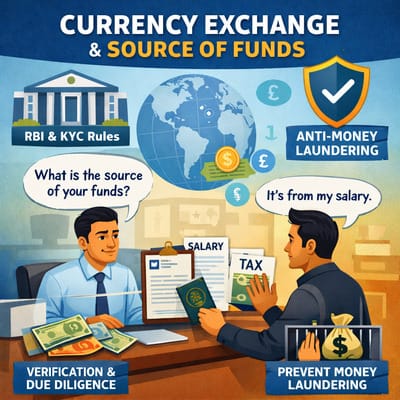
What Does “Source of Funds” Actually Mean?
The term “source of funds” simply refers to where your money comes from. It could be your salary, personal savings, business income, or even money received from selling an asset. When a money changer asks this question, they’re not judging your finances—they’re verifying that the money is legitimate.
This step is part of financial due diligence. By clearly stating your source of funds, you make your transaction smoother and faster. There’s less delay, fewer questions, and a much better experience overall.
Even when you search for money exchange service locations near me and visit a nearby branch, this same process applies. It ensures consistency, safety, and compliance across all locations.
Why Is It Mandatory in India? (RBI & KYC Explained)
In India, foreign exchange transactions are regulated by the Reserve Bank of India (RBI). Every authorized money changer must follow Anti-Money Laundering (AML) and Know Your Customer (KYC) guidelines.
KYC involves verifying your identity and understanding your financial background. This includes checking your source of funds to ensure your transaction aligns with your profile.
These rules are not optional—they are mandatory. They help prevent fraud, illegal transactions, and misuse of the financial system. While it may feel like an extra step, it ensures your safety as well.
How This Helps Prevent Money Laundering
Money laundering is the process of making illegal money appear legal. Currency exchange services can be targeted if proper checks are not in place.
By asking for the source of funds, money changers create a transparent record of every transaction. This makes it difficult for illegal activities to go unnoticed and helps maintain a clean financial system.
This process also protects you from being unknowingly involved in suspicious transactions, ensuring your financial history remains safe and compliant.
What Documents Might You Need?
To verify your source of funds, you may need to provide simple documents such as:
- Bank statements
- Salary slips
- Income tax returns
- Business invoices
These documents confirm that your funds come from legitimate sources and help speed up the transaction process.
Do Small Transactions Also Require This?
Many people believe only large transactions are checked, but that’s not true. Even smaller transactions may be reviewed if they appear unusual.
Financial systems track patterns, not just amounts. Multiple small transactions can sometimes raise concerns, which is why checks are applied consistently.
Choosing the Right Forex Partner Matters
Selecting a reliable forex provider ensures a smooth and secure experience. A trusted company follows all regulations while offering efficient service.
Working with Sapphire Forex means you’re dealing with an RBI-authorized provider that prioritizes compliance and customer satisfaction. If you need assistance, feel free to contact us for expert support.
Final Thoughts
Being asked about your source of funds might seem like a small step, but it plays a crucial role in maintaining a safe and transparent financial system. It protects you, prevents illegal activities, and ensures compliance with regulations.
The next time you exchange currency, you’ll understand why this question matters—and how it benefits you.
FAQs
1. Is source of funds required for every transaction?
Yes, in most cases it is required under RBI and KYC guidelines.
2. Can I complete a transaction without documents?
No, verification is usually mandatory for compliance.
3. How long does verification take?
It is usually quick if you have the required documents ready.
4. Is my personal information safe?
Yes, authorized money changers follow strict data protection rules.
5. Why are small transactions also checked?
Because monitoring focuses on patterns, not just transaction size.