
Travel has evolved, and so has the way people handle money abroad. Gone are the days when carrying large amounts of cash was the only option. Today, travelers are faced with a smarter choice: cash or digital forex. But which one actually makes more sense?
If you’re planning an international trip and dealing with currency exchange in India, understanding this shift can help you save money, stay secure, and travel more confidently.
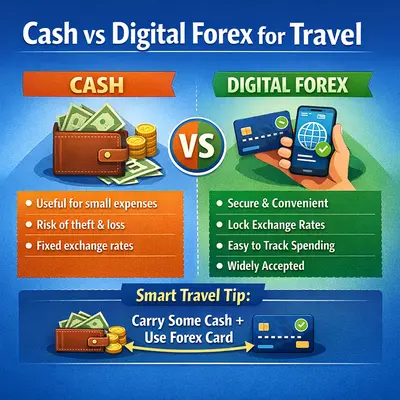
The Traditional Approach: Carrying Cash
For decades, cash has been the go-to option for international travelers. It’s simple, widely accepted, and doesn’t depend on technology. You exchange your INR into a foreign currency and carry it with you.
Why Travelers Still Use Cash
- Small purchases like taxis, tips, or street food
- Places where digital payments are limited
- Emergency situations
Cash also helps control spending since you physically see how much you’re using.
The Downsides of Cash
Carrying large amounts of cash can be risky due to theft or loss. Also, once exchanged, you’re locked into that rate. Many travelers ignore insights from Why Currency Exchange Rates Fluctuate Daily, leading to poor timing decisions.
The Rise of Digital Forex Solutions
Digital forex options like forex cards, international debit cards, and mobile wallets are becoming increasingly popular among travelers.
Why Digital Forex Is Gaining Popularity
- Better security with card blocking features
- Convenience and ease of use
- Ability to lock exchange rates
- Wide global acceptance
Travelers following guides like Best Currency Exchange Tips for First-Time International Travelers are increasingly choosing digital options for these benefits.
Cash vs Digital Forex: A Practical Comparison
| Feature | Cash | Digital Forex |
|---|---|---|
| Security | Risk of theft/loss | Can be blocked/replaced |
| Convenience | Limited | High |
| Exchange Rate | Fixed at purchase | Can lock or reload |
| Tracking Expenses | Difficult | Easy |
| Acceptance | Universal | Widely accepted |
So, What Are Smart Travelers Choosing Today?
Most experienced travelers prefer a balanced approach rather than choosing one option. They carry a small amount of cash for local use and rely on digital forex for most transactions. This combination provides both convenience and security.
How to Avoid Unnecessary Charges While Exchanging Currency
Hidden fees can quietly reduce your travel budget. Many travelers lose money due to poor exchange decisions. Learning How to Avoid Extra Charges When Exchanging Currency in India can help you save significantly.
- Avoid airport currency exchange counters
- Compare rates before exchanging
- Choose RBI-authorised providers
- Check for hidden fees
Choosing the Right Forex Partner Matters
Your forex provider plays a key role in your overall experience. A trusted company like Sapphire Forex ensures transparent pricing and competitive rates.
With professional sapphire forex services, you get tailored solutions for your travel needs. If you need guidance, you can always contact sapphire forex for expert support.
Final Thoughts: Cash or Digital Forex?
There’s no one-size-fits-all answer. However, digital forex is becoming the preferred choice, with cash used as a backup. By combining both options and making informed decisions, you can travel smarter, safer, and more efficiently.
FAQs
1. Is it better to carry cash or a forex card?
A mix of both is ideal for flexibility and security.
2. Are forex cards safe?
Yes, they are secure and can be blocked if lost.
3. Can I avoid exchange rate fluctuations?
Yes, by locking rates using forex cards.
4. Why avoid airport exchange?
They usually have poor rates and high fees.
5. How can I reduce forex charges?
Plan ahead and use trusted providers like Sapphire Forex